8 Types of Board Games You Really Need to Know About
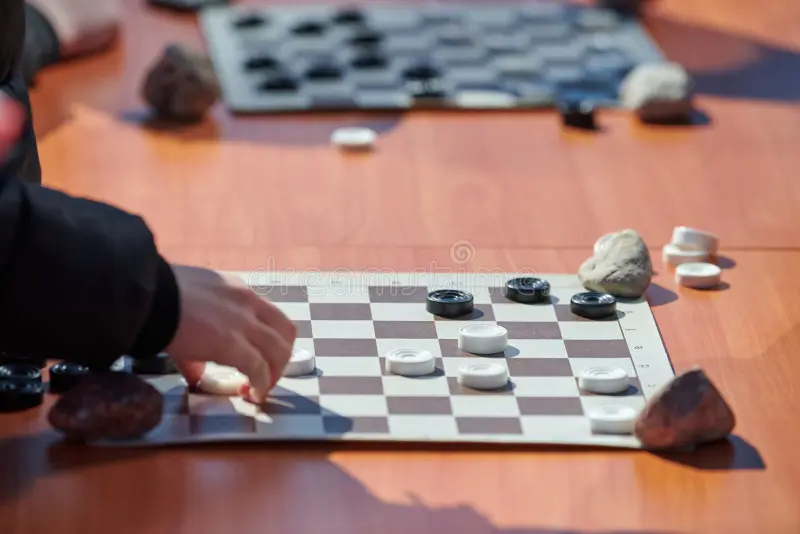
Last weekend, while visiting my local game café, I watched something fascinating. At one table, some guys hunched over a Go board, contemplating their next move for five solid minutes. Two tables over, a couple I assume retired cheerfully captured each other's pieces in checkers, laughing at each blunder. In the corner, serious chess players recorded their moves with barely a word spoken between them.
This scene captured what I love about board games; they're not just one thing. They span cultures, centuries, and complexity levels. Some take minutes to learn, others a lifetime to master. Before we dive in, I should mention that while there are literally thousands of board games in existence, I've selected eight that represent essential experiences every game enthusiast should know about.
1. Chess: The Infinite Game
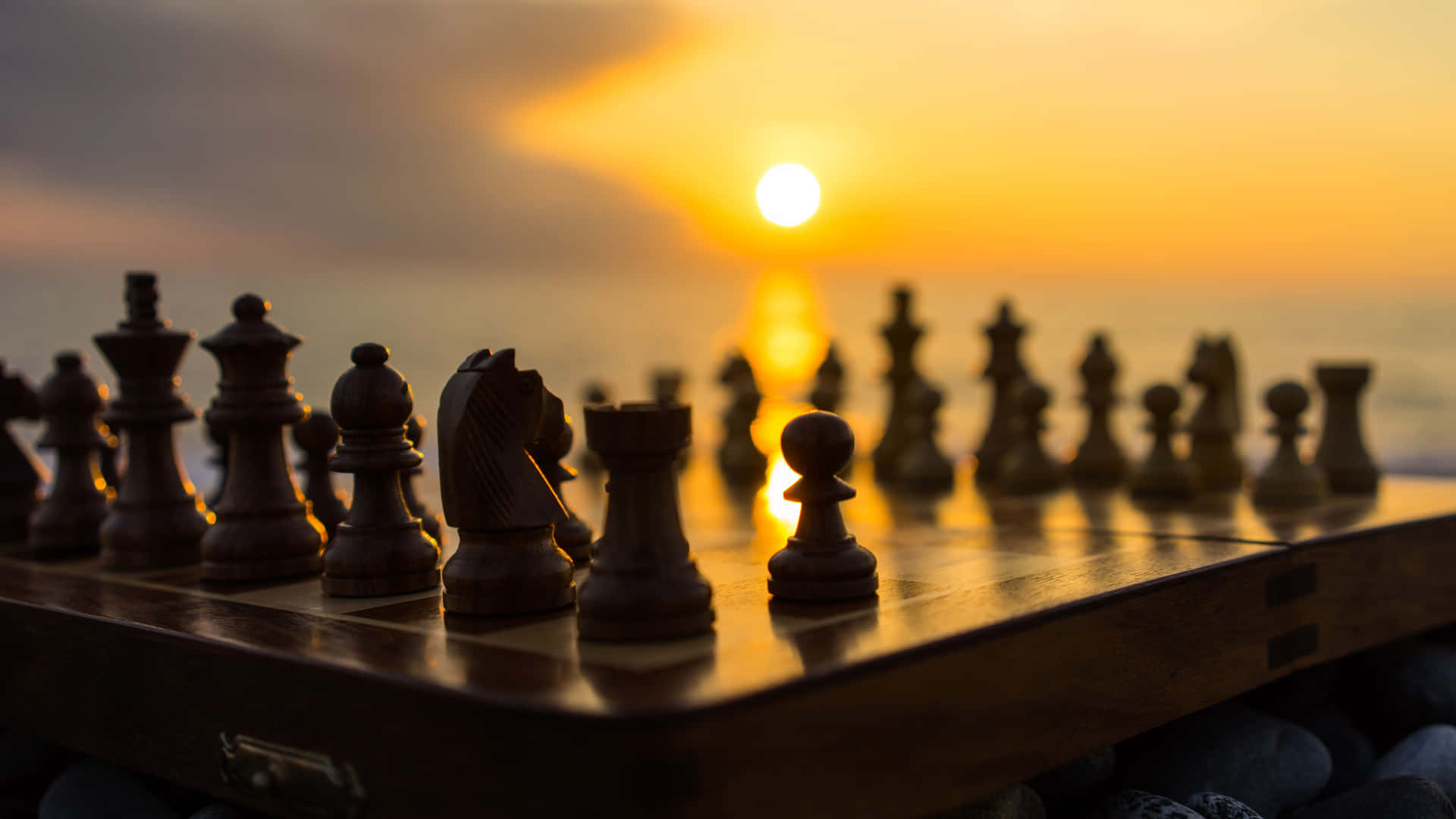
You've probably heard of chess, but have you really experienced it? This 1,500 year-old game from India remains the gold standard for strategic depth. The beauty of chess lies in its deceptive simplicity: six different piece types, 64 squares, and rules you can teach a child in an afternoon. Yet grandmasters spend lifetimes studying it without exhausting its possibilities.
Why Chess Matters
Chess teaches you to think ahead, not just one move, but chains of moves extending into the future. When you play chess online, you're joining a tradition that spans from medieval courts to modern supercomputers. IBM's Deep Blue defeating Garry Kasparov wasn't the death of chess; it was proof of how profound the game truly is.
The game's popularity hasn't diminished in the digital age. If anything, online platforms have created a renaissance. You can now play chess vs computer at any difficulty level, or challenge friends in chess two player matches regardless of where they live.
Basic Chess Rules
Each player starts with 16 pieces: one king, one queen, two rooks, two bishops, two knights, and eight pawns. The goal is checkmate i.e trapping your opponent's king so it cannot escape capture. Each piece moves differently:
- Pawns: Forward one square (two on first move), capture diagonally
- Knights: L-shaped jumps, can leap over other pieces
- Bishops: Any number of squares diagonally
- Rooks: Any number of squares horizontally or vertically
- Queens: Combines bishop and rook movement
- Kings: One square in any direction
The complexity emerges from how these pieces interact. A knight and bishop work together differently than two bishops. Rooks dominate open files. Pawns create structures that determine the entire game's character.
What makes chess endlessly fascinating is that it rewards different thinking styles. Tactical players love sharp combinations. Positional players prefer slowly improving their position. Aggressive players attack the king. Defensive players counterattack brilliantly. There's no single path to victory.
2. Checkers (Draughts): Underestimated Brilliance
Here's a confession: I used to think checkers was chess's simple cousin. Then I watched a championship match and realized how wrong I was. Checkers might be easier to learn, but the strategic depth is genuine and the endgames are brutally precise.
The Democratic Game
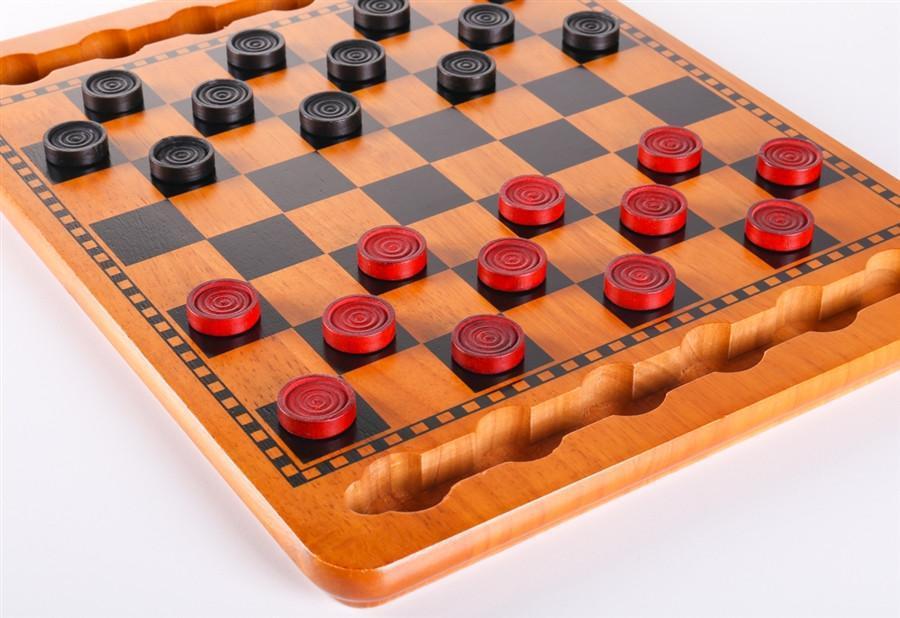
What I love about checkers is its accessibility. You can teach someone the rules in five minutes. Pieces only move diagonally on dark squares. Capture by jumping. Reach the far side and crown your piece. Simple, right?
But within that simplicity lives real strategy. Should you trade pieces or maintain material? When do you force jumps to your advantage? How do you create a king while preventing your opponent from doing the same? These questions have occupied serious players for centuries.
The best part? You can play checkers online and immediately start enjoying yourself, even as a beginner. Unlike chess, where beginners often get crushed, checkers gives you fighting chances from day one. Yet the skill ceiling remains high enough that masters study it for decades.
Checkers Rules
Players start with 12 pieces on opposite sides of an 8x8 board. Pieces move diagonally forward one square at a time. When you can jump an opponent's piece, you must; this forced capture rule creates the game's tactical richness.
Reach the opposite end and your piece becomes a king, gaining the ability to move backwards. This transforms the endgame. A single king can outmaneuver multiple regular pieces with skillful play.
The game ends when one player captures all opposing pieces or blocks them from moving. What appears simple on the surface becomes deeply tactical in practice. Playing checkers vs computer opponents helps you recognize patterns and improve your forced-jump calculations.
3. International Draughts: Checkers' Ambitious Cousin
If checkers is the people's game, International Draughts is the epic version. Played primarily in Europe, Russia, and parts of Africa, this 10x10 variant takes everything great about checkers and amplifies it.
Spectacular Combinations
I'll never forget watching my first International Draughts match. A player sacrificed four pieces in succession, and I thought they'd lost their mind. Then suddenly, whoosh; their remaining piece swept across the board in a chain of jumps, capturing six pieces in one turn. This is the magic of draughts.
The larger board and flying kings (which can move multiple squares diagonally) create opportunities for combinations that feel almost artistic. You'll see sacrifices, forced sequences, and dramatic reversals that simply aren't possible in standard checkers.
Why You Should Try It
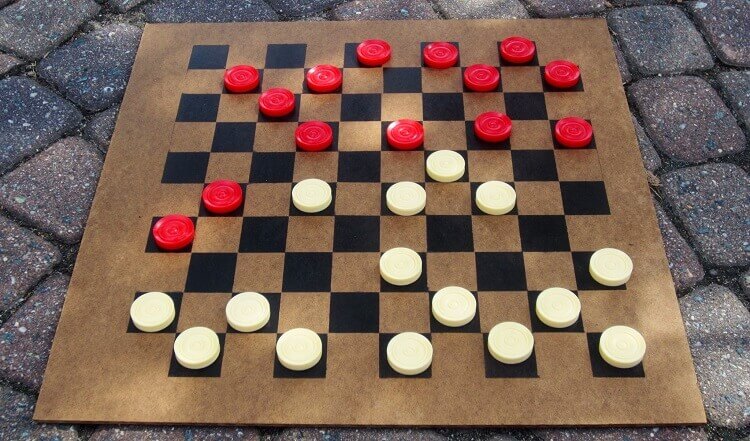
International Draughts online offers something unique: it's approachable enough for checkers players to transition smoothly, yet deep enough to remain interesting for serious competitors. Many players describe it as the perfect middle ground between checkers and chess.
The rules resemble checkers with key differences: you play on a 10x10 board with 20 pieces per side. Kings can move any number of squares diagonally and must continue jumping if possible. When multiple captures are available, you must make the capture that takes the most pieces.
These rules create tactical possibilities that make every game feel fresh. Playing draughts vs computer helps you learn the patterns, but the real joy comes from those unexpected moments when a brilliant combination materializes on the board.
4. Go: Ancient Complexity
If chess is a tactical battle, Go is strategic warfare on a grand scale. This 2,500-year-old game from China looks deceptively simple: black and white stones placed on a grid. The goal? Control more territory than your opponent.
Why Go Feels Different
Go teaches patience in a way few games can. There's no immediate gratification here. You place stones that might not show their purpose for fifty moves. Battles rage in multiple board areas simultaneously. Knowing when to fight and when to abandon a position requires wisdom, not just calculation.
The game scales beautifully too. Beginners play on smaller 9x9 boards. Intermediate players use 13x13 boards. Masters compete on the full 19x19 grid with 361 intersections. Even after decades of study, top players discover new patterns and strategies.
Basic Concepts
Stones are placed on intersections, not squares. Connected stones form groups. Groups with two separate internal spaces (called "eyes") cannot be captured. Territory is empty space surrounded by your stones. The player controlling more territory wins.
What makes Go profound is that these simple rules create emergent complexity. There's no quick checkmate, no sudden victory. Instead, advantage accumulates through small, precise moves. It's less like a battle and more like painting—each stone adds to the overall picture.
5. Backgammon: When Dice Meet Strategy
"But backgammon has dice!" I can hear the purists complaining. Yes, and that's exactly why it belongs on this list. Backgammon proves that randomness and strategy can coexist beautifully.
The Gambling Game
Backgammon's history is intertwined with gambling, and for good reason. The dice inject uncertainty that makes every match exciting. You might be winning comfortably, then roll double ones and watch your position crumble. Or you might need exactly double sixes to win and—against all odds—get them.
But here's the crucial point: luck evens out over many games. Skilled players consistently beat weaker ones because they maximize good rolls and minimize damage from bad ones. Probability calculations, positional understanding, and knowing when to play aggressively or defensively all matter enormously.
How It Works
Two players move their 15 checkers around a board with 24 triangular points. Roll dice, move that many points. Land on an opponent's single checker and send it to the bar. Bear off all your pieces first to win.
The doubling cube adds a fascinating psychological element. Either player can offer to double the stakes. Your opponent must either accept (doubling what's at risk) or concede immediately. This creates incredible tension in close matches.
6. Mancala: The Oldest Game You've Never Played
Mancala might be the oldest board game family in existence, with archaeological evidence suggesting games like it were played in ancient Egypt and Ethiopia over 3,000 years ago. Yet many Western players have never experienced it.
Elegance in Motion
What captivates me about Mancala is its physical beauty. Watching stones cascade from hand to board, dropping one per pit in a continuous flow, creates an almost meditative rhythm. The rules are simple: collect more stones than your opponent. But the tactics? Surprisingly deep.
Different regions play different variants—Oware in West Africa, Bao in East Africa, Kalah in North America. Each has slightly different rules, but all share that satisfying mechanic of sowing stones around the board.
Why It Deserves Recognition
Mancala teaches resource management and planning in an intuitive way. You can see multiple moves ahead by mentally tracking where your stones will land. Experienced players set up elaborate chains, engineering board positions that yield massive advantages several turns later.
The game also has cultural significance. In many African communities, Mancala isn't just entertainment—it's a social ritual, a teaching tool, and a connection to ancestral traditions.
7. Shogi: Japanese Chess with a Twist
Imagine chess, but every captured piece joins your army. That's the revolutionary concept behind Shogi, Japanese chess. This single rule change transforms the entire strategic landscape.
Pieces Never Die
In Western chess, captured pieces leave the game. In Shogi, they become yours to redeploy anywhere on the board. This creates wildly different strategic priorities. Material advantage matters less than position. A simple pawn in hand might be worth more than a powerful piece stuck in a bad position.
The game uses a 9x9 board with 20 pieces per side. Most pieces move differently than their chess counterparts. The promoted pieces (achieved by reaching the far side) are particularly interesting—pieces transform into stronger versions while maintaining their essential character.
Strategic Depth
Shogi games tend to be more aggressive than chess. Why? Because defending is difficult when your opponent can drop pieces behind your lines. This encourages fierce attacking play and creates incredibly dynamic positions.
The drop rule also means games rarely simplify into boring endgames. Even when only a few pieces remain on the board, both players likely hold captured pieces that can dramatically shift the position. Every move carries tension.
8. Xiangqi: Chess Across the River
Chinese chess (Xiangqi) deserves mention alongside its Western cousin. Played by millions across Asia, it offers a distinct strategic flavor that chess players find both familiar and refreshingly different.
The River Divides
The most striking visual difference is the river cutting across the board's middle. This river restricts certain pieces and creates a natural defensive barrier. Generals (like kings) cannot leave their fortress. Elephants cannot cross the river. These constraints create unique tactical patterns.
Cannons are particularly clever pieces—they move like rooks but must jump over exactly one piece to capture. This mechanic creates fascinating tactical problems. Sometimes you need pieces precisely positioned for your cannon to threaten effectively.
Why It's Worth Learning
Xiangqi teaches different strategic lessons than Western chess. The confined generals mean mating attacks happen faster but require more precision. The river creates natural staging areas for attacks. The cannon's unique movement encourages creative tactical thinking.
For chess players, learning Xiangqi is like speaking a related language. The vocabulary feels familiar, but the grammar is different. This mental flexibility—seeing strategy through different frameworks—enriches your understanding of both games.
What These Games Teach Us
After exploring these eight games, a pattern emerges. The best board games aren't just entertaining—they're tools for understanding complexity, managing uncertainty, and thinking strategically. Each game emphasizes different skills:
Chess teaches calculation and pattern recognition. Checkers proves that simplicity doesn't mean shallow. International Draughts shows how small rule changes create enormous strategic shifts. Go demands patience and long-term thinking. Backgammon teaches probabilistic decision-making under uncertainty. Mancala rewards resource management and planning. Shogi encourages aggressive, dynamic play. Xiangqi shows how constraints shape strategy.
Getting Started
The beautiful thing about living in 2026 is that you don't need physical boards, opponents nearby, or years of study to begin enjoying these games. Online platforms have made every game accessible.
Want to start with the classics? Play chess online free, try checkers online, or experience International Draughts. Each offers multiple difficulty levels, so you can learn at your own pace.
Prefer watching before playing? Check out live games to see how experienced players approach these classics. You'll pick up strategies and tactics just by observing.
Why Board Games Still Matter
We live in an age of sophisticated video games with photorealistic graphics and massive multiplayer worlds. So why do ancient board games persist? Because they offer something digital games rarely can: pure strategic combat stripped to its essence.
No random critical hits. No hidden information (in most cases). No grinding to unlock better pieces. Just you, your opponent, and the board. Victory comes from outthinking the person across from you, and that satisfaction never gets old.
These games also connect us to history in tangible ways. When you move a knight in chess, you're following rules developed in medieval Persia. When you jump pieces in checkers, you're engaging with a tradition stretching back thousands of years. The games are living history.
Which Game Should You Learn?
If you want immediate enjoyment with low barrier to entry, start with checkers. The rules take minutes to learn, and you'll be playing complete games within an hour.
If you're ready for a deeper challenge that rewards long-term study, chess is the obvious choice. The established online community, vast teaching resources, and century of documented strategy make it the most supported game on this list.
If you want something between checkers and chess in complexity, International Draughts might be your perfect fit. It offers tactical fireworks without chess's overwhelming opening theory.
For something completely different, try Go, Shogi, or Xiangqi. Each provides a fresh perspective on strategic thinking.
Final Thoughts
Board games have survived for millennia because they tap into something fundamental about human nature. We love challenges. We enjoy competition. We take pride in improving our skills. Simple pieces on a simple board create complexity enough to occupy the smartest people on Earth for entire lifetimes.
The eight games covered here represent just a fraction of what's available. Hundreds of traditional games exist worldwide, each with devoted communities and unique strategic flavors. And modern board game design continues evolving, creating new experiences constantly.
But these eight form a solid foundation. Master even one, and you'll gain insights that apply far beyond the board. You'll think more clearly, plan more carefully, and appreciate the beauty of elegant systems. You'll join communities spanning continents and generations.
The board is waiting. The pieces are ready. Which game will you learn first?